A landmark cycleway is less useful if the streets leading to it leave riders dodging parked vehicles. That is the problem New York City’s transport department identifies on the Brooklyn approach to the Brooklyn Bridge—and the reason for its latest access work.
NYC DOT announced the project on 1 October 2026, with work starting on Boerum Place and Adams Street. The redesign links Boerum Hill towards DUMBO and includes a two-way protected path. The important detail is that delivery is staged: the announcement does not mean every section is already available.
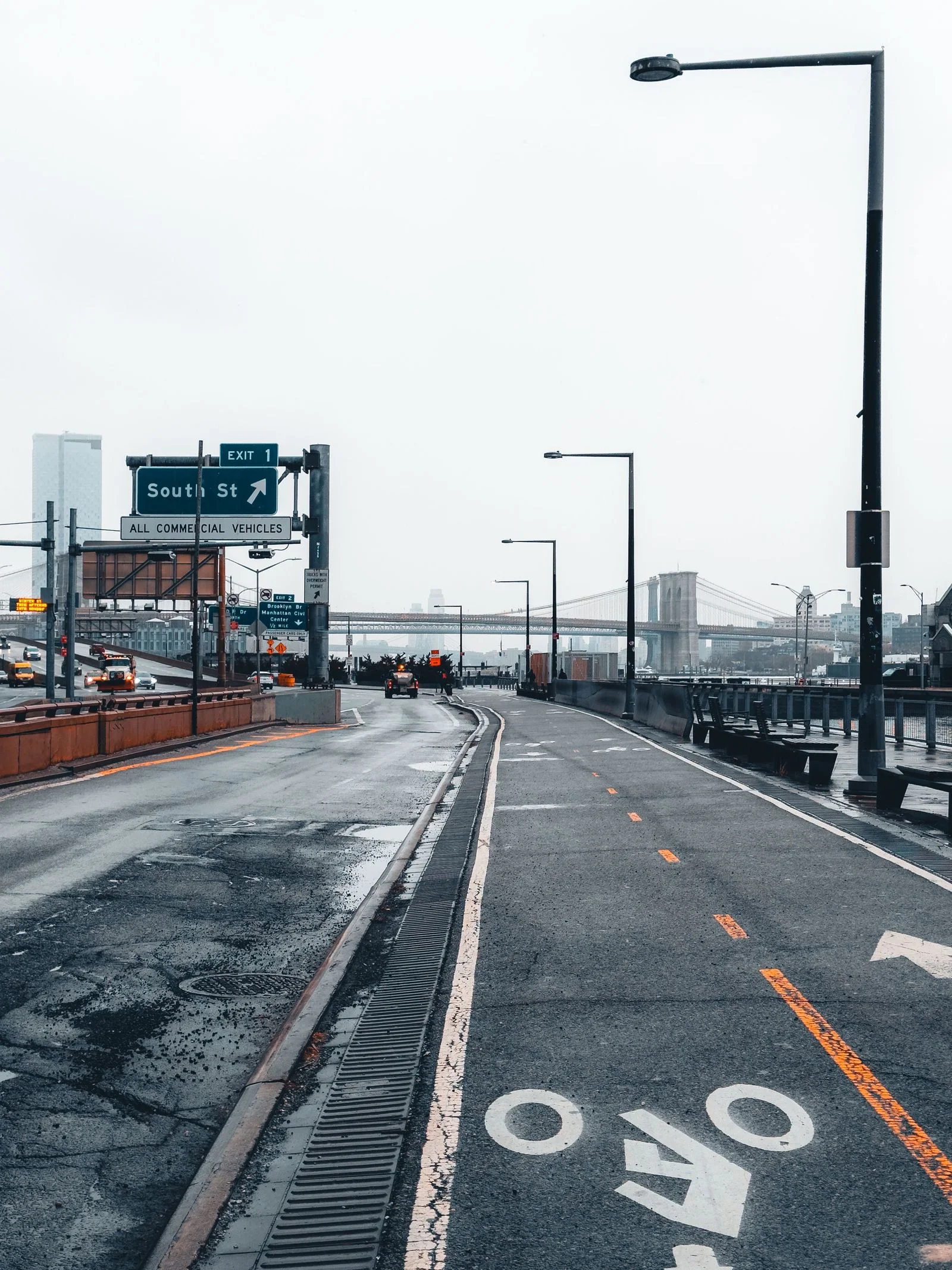
Which streets are involved, and when?
The planned redesign extends from Bergen Street to Front Street, just over a mile. A two-way protected path is planned between Bergen and Johnson Streets. The authority schedules Atlantic Avenue–Tillary Street implementation in 2026, with Bergen Street–Atlantic Avenue following in 2027.
In DUMBO, the announcement also specifies a protected lane between Sands and York Streets, a standard lane from York to Front Street, and an upgrade on Sands Street between Jay and Adams Streets. These are planned stages, not confirmation that each section is already open.
Why the approach needs attention
NYC DOT identifies recurring illegal double parking in the existing Adams Street lane as a problem. Protection is intended to make the connection more reliable, rather than merely add another line on a map. UK readers can apply the same test to local proposals: does the design protect the difficult links into the route as well as the main stretch?
What riders should check
For a journey through the area, check current works notices and follow signs on the ground. A planned connection and an open connection are different things. The announcement gives implementation stages rather than a single date when the entire approach can be assumed complete.
Our view: the last awkward stretch matters
The useful lesson for UK cycling schemes is continuity. A protected route should connect to the places riders actually need to reach. Its junctions and approach streets deserve the same attention as its most photogenic section.
Ask how a proposal handles the transition to the next street, the station entrance or the crossing at the end. A short gap can decide whether a whole journey feels manageable. The bridge gets the postcard; the approach does much of the practical work.
Official announcement
New York City Department of Transportation’s Biketober announcement.
Join the discussion
What has worked for you? Share your experience or ask a question about this article.
Sign in with GitHub to comment. Your comment and GitHub profile name will be public. Comments appear when posted and may be moderated afterwards.
Keep replies relevant and respectful. No spam, personal information or unsupported accusations. Discussion and privacy information.